
The Rule of Three: How to Balance Tapware, Tiles and Vanity Finishes
Choosing bathroom finishes usually starts with one product. It might be a tapware finish, a tile or a vanity you've already fallen in love with. From there, every other decision begins to take shape.
It's easy to compare tile samples with tapware or hold cabinet swatches against benchtops, trying to make every finish match. In reality, the best bathrooms don't rely on matching materials. Instead, each finish has a clear purpose.
That's the idea behind the Rule of Three. Rather than treating every selection equally, you give each finish a role. One leads the design, another supports it and the third helps bring the room together. It's a simple way to make confident decisions and create a bathroom that feels cohesive without overthinking every choice.
What Is the Rule of Three?
Every bathroom has one feature that sets the direction for the space. That's your focal point. It doesn't need to be bold. It could be a beautifully crafted vanity, a handmade tile with subtle texture or a tapware finish you want repeated throughout the room.
Once you've chosen that starting point, selecting the remaining finishes becomes much easier. Instead of asking whether products match exactly, ask whether they suit the same style and contribute to the overall look you're trying to achieve.
Supporting finishes can still introduce texture, warmth and personality, but they should work alongside your main feature rather than compete with it.
For example, a soft ivory handmade tile can become the focal point through its texture alone. Pair it with simple tapware and a natural timber vanity and the subtle variation becomes the standout feature. The same approach works if your starting point is an oak vanity or a Warm Brushed Nickel tapware finish. The Rule of Three isn't about following strict design rules. It's about giving every finish a purpose.
Step One: Choose Your Starting Point
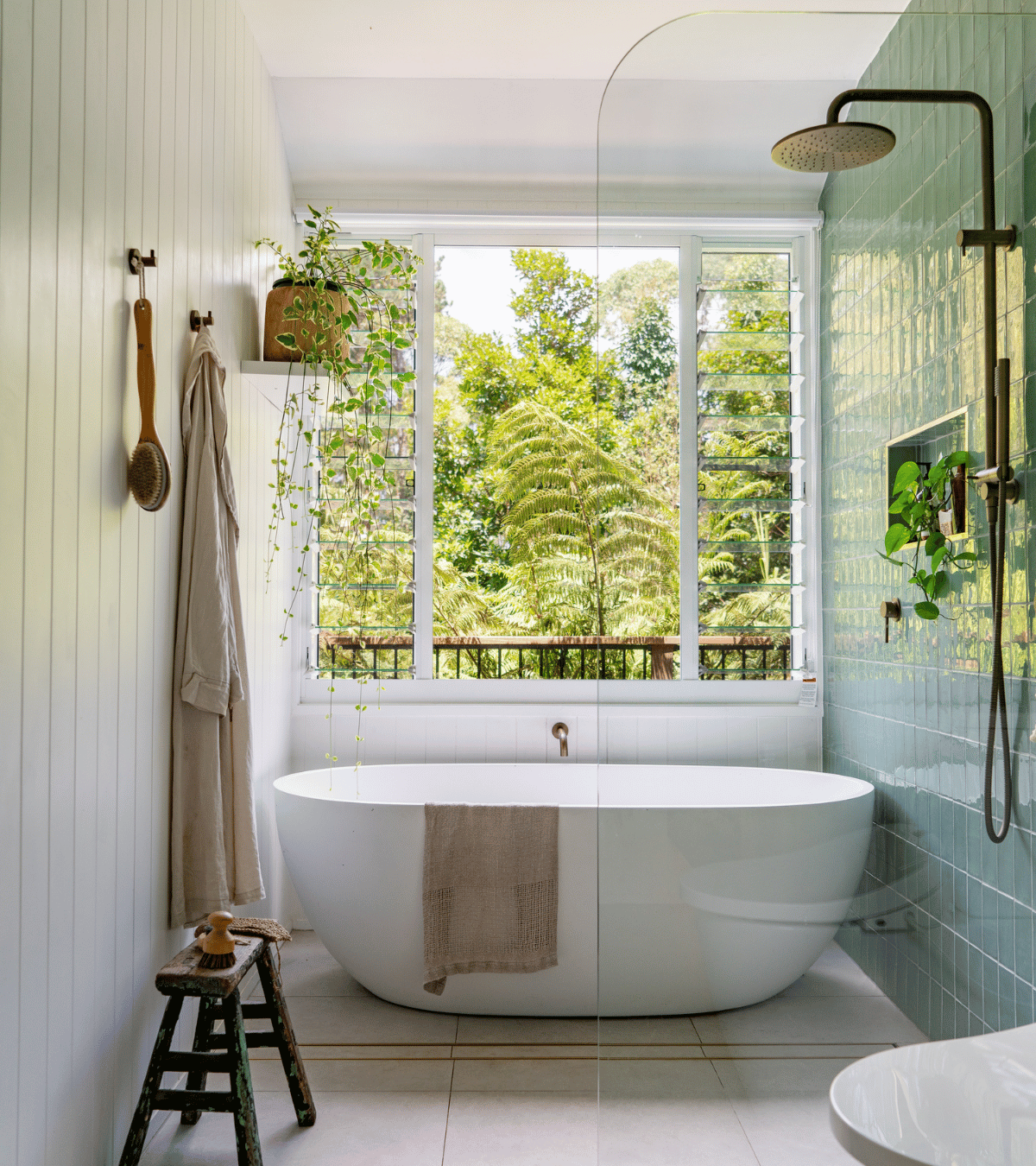
There's no right or wrong place to begin a bathroom renovation. Some people choose a tapware finish first, while others fall in love with a tile or find the perfect vanity before anything else.
Wherever your renovation starts, let that product guide the rest of your selections. Once you've identified your focal point, every other finish should support it rather than compete for attention.
Step Two: Let Your Remaining Finishes Support It
If You're Starting With Tapware
Tapware is often the easiest place to begin because its finish is repeated throughout the room. You'll see it at the basin, shower, bath and across accessories like towel rails, robe hooks and toilet roll holders, naturally creating consistency throughout the space.
If you've chosen Brushed Brass, let it set the tone with handmade tiles, warm stone look porcelain and an oak vanity. These finishes share the same warmth, creating a relaxed and welcoming bathroom without feeling overly styled.
If Antique Brass is your starting point, pair it with walnut cabinetry, travertine look tiles and earthy colours that reinforce its depth and character.
For a softer, contemporary look, Warm Brushed Nickel works beautifully alongside stone look tiles, natural timber vanities and subtle textures that create a calm, timeless feel.
If flexibility is your priority, Stainless Steel complements almost any bathroom style. Its neutral appearance pairs comfortably with handmade tiles, large format porcelain and a wide range of vanity finishes, making it easy to build a balanced design around.
The goal isn't to make your tiles or vanity match the tapware exactly. It's to choose finishes that support the same overall style.
If You're Starting With Tiles
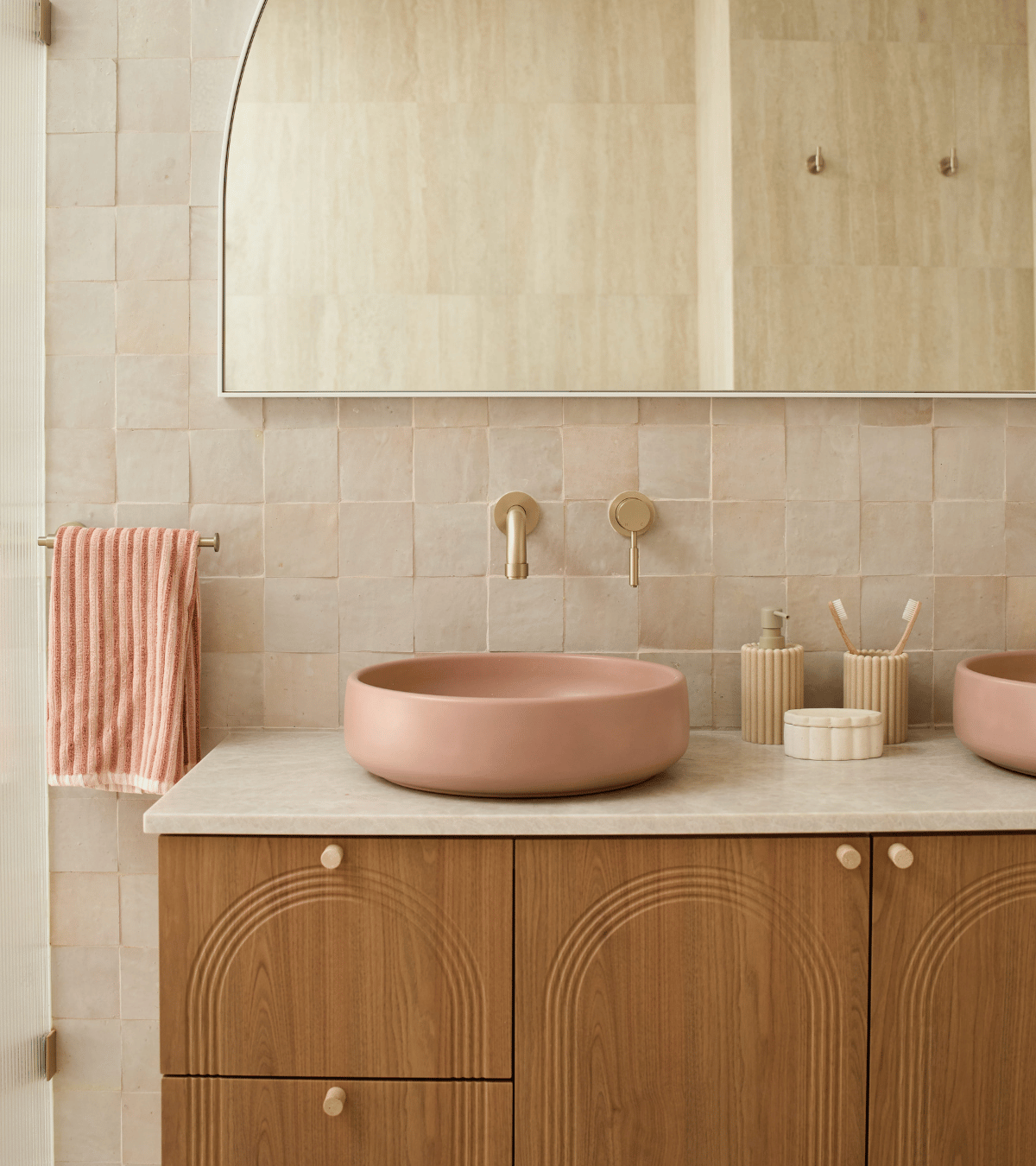
Tiles often become the largest visual feature in a bathroom, making them a natural place to begin.
If you've chosen a handmade tile with movement and texture, allow it to remain the focal point by selecting understated tapware and a vanity that complements its character. The tile provides the personality, while the remaining finishes help bring the space together.
If you've selected large format porcelain or a simple stone look tile, you have more freedom to introduce warmth through timber cabinetry or make a subtle statement with your tapware finish.
Rather than focusing on colour alone, ask yourself a few simple questions.
Are the finishes similar in warmth?
Do they suit the same design style?
Does each finish have a purpose within the room?
Is one feature trying to overpower the others?
These questions will often lead to a more balanced result than trying to match colours exactly.
If You're Starting With a Vanity
A vanity is one of the largest pieces in the bathroom, so it naturally influences the overall design.
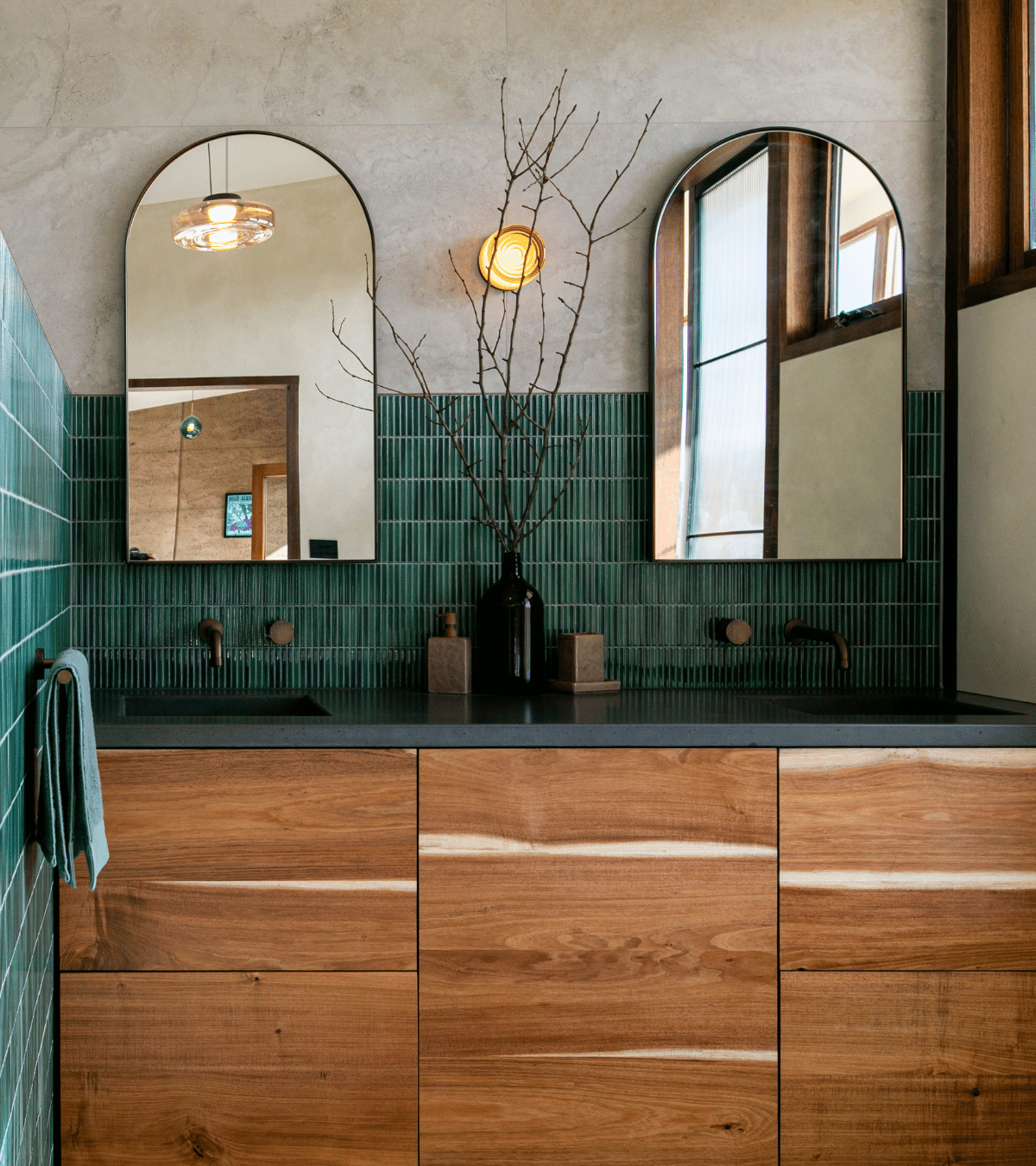
A timber vanity introduces warmth and texture, pairing beautifully with brushed tapware finishes and natural stone look tiles. A painted vanity creates a cleaner, more refined look that works well with crisp porcelain tiles and contemporary tapware.
Once you've chosen your vanity, let your tapware and tiles reinforce that direction. If your vanity is already making a statement through timber grain, fluting or colour, there's no need for every other finish to compete for attention.
When every product plays a different role, the space feels considered instead of busy.
Step Three: Check the Balance
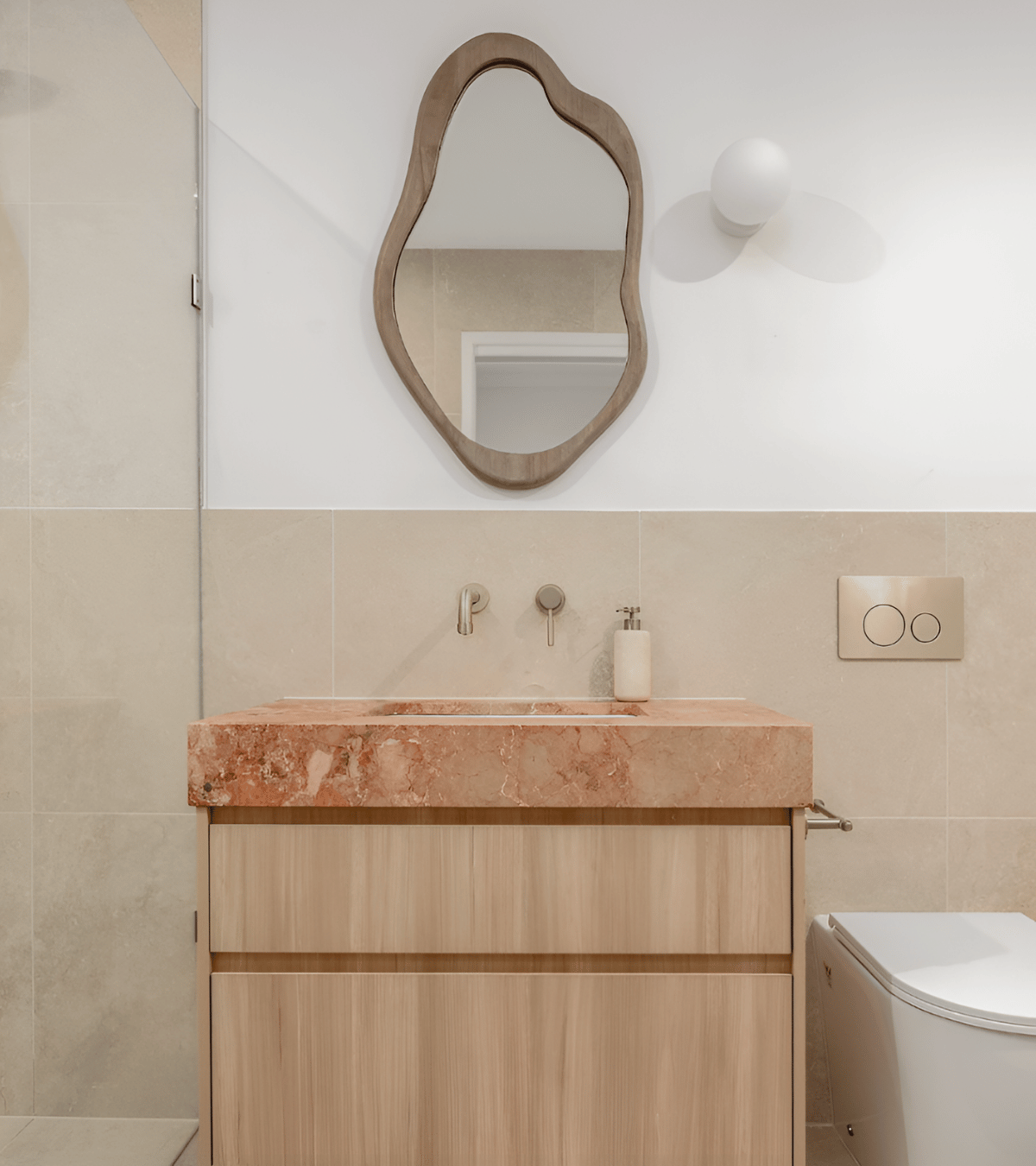
Before making your final selections, bring your tapware, tile and vanity samples together.
Looking at them in natural light is one of the simplest ways to see whether they work as a collection. Instead of asking whether they match, ask whether they create the style and feeling you're trying to achieve.
Often it's the combination of warmth, texture and finish that creates a cohesive bathroom, not perfectly matching colours.
Three Common Mistakes When Choosing Bathroom Finishes
Even with a clear vision, it's easy to overcomplicate your selections.
1. Trying to Match Everything
Bathrooms feel more considered when finishes complement one another rather than match perfectly. Focus on creating a consistent style instead of identical colours or materials.
2. Choosing Products in Isolation
Selecting tapware one week, tiles the next and a vanity months later makes it much harder to judge how they'll work together.
Whenever possible, compare your key selections side by side before making your final decision.
3. Too Many Feature Finishes
Every bathroom benefits from a clear focal point.
If every surface demands attention, the room can quickly feel busy. Let one finish lead the design while the remaining selections support it.
Bringing It All Together
Choosing bathroom finishes doesn't need to feel overwhelming.
The Rule of Three gives you a simple framework for making confident decisions. Whether your renovation begins with tapware, tiles or a vanity, start with the product that inspires you most, then choose finishes that support it rather than compete with it.
When every finish has a purpose, the result is a bathroom that feels balanced, practical and timeless.

Layla is a creative at heart, with an Advanced Diploma in Interior Design and being the Senior Marketing and Ecommerce Coordinator here at Yabby she has a passion for staying up to date with the latest trends within the industry. Known for going down a rabbit hole on Pinterest and being a sucker for a good mood board to kick off any project.